Oracle NetSuite ERP
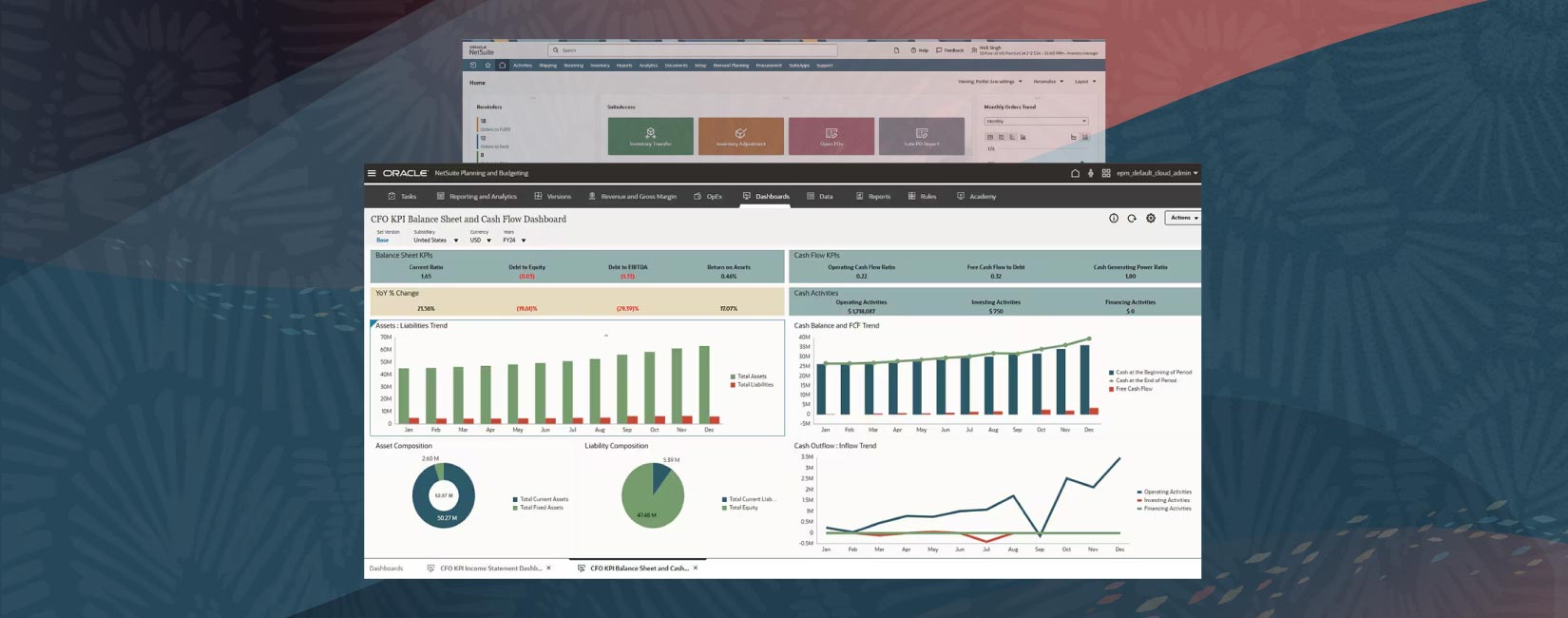
Trusted by over 43,000 companies, Oracle NetSuite is the world’s most widely used cloud ERP software – a comprehensive business management solution proven on a global scale.


One system. All processes. Full visibility.
An ERP system connects data and processes across the entire business.Implemented right, it becomes the foundation your company grows on.
Finding the right solution takes expertise. We have been doing it for over 20 years.
Not sure which ERP system to choose?
When an ERP system is chosen and implemented correctly, the effect is felt across the entire organisation – decisions are made faster, teams stop duplicating work, and management gets the visibility it needs in real time.
The path there starts with a genuine understanding of the business – how it operates, where it is headed, and what it needs from a system to get there.
Since 2006, we have worked with companies in manufacturing, distribution, wholesale, financial services and professional services across Bulgaria and Europe. We bring the business understanding and technical depth to ask the right questions and recommend the solution that truly fits.
The result is a system that is used and grows alongside the business.
Explore the ERP solutions we implement and support – each suited to a different type of organization, scale and set of requirements.



Since 2006, we have implemented ERP systems in mid-size and large organizations across Bulgaria and Europe in manufacturing, distribution, wholesale, financial services and professional services.

Every project is different. Behind each one is a team that understands the client’s business deeply enough to make the right decisions.

We analyze processes and structure requirements before any configuration begins. The consultancy done before the system is installed determines whether the project succeeds.

Our specialists are certified and work with the platforms in our portfolio – Oracle NetSuite, SOFTONE and Enterpoint. That focus translates directly into smoother implementations, shorter timelines and confident project leadership at every stage.

The consultants who analyzed your business implement the system, train your team and provide expert post-project support.

Most of our clients have worked with us for years – the system grows alongside their business, with scope expanding as new needs emerge.






What is an ERP system and does my company need one?
ERP stands for Enterprise Resource Planning – a system that connects all the key functions of an organization in a shared environment with a single database: accounting, operational processes, sales, warehouse management, reporting, CRM. If your departments work in isolated systems, if data is transferred manually between teams, or if management decisions are regularly delayed by slow-arriving reports, moving to ERP is the logical next step. The question is not whether you need such a solution, but which one fits your organization and how it should be implemented.
How long does an ERP implementation take?
Timelines depend on the scope of the project, the number of modules being implemented and the level of customization required. A clearly scoped project for a mid-size organization can be completed in three to four months, particularly when starting with a solution like Enterpoint with pre-configured modules. A full transformation covering multiple business units and complex integrations typically takes between six and twelve months. At the initial meeting with our consultants, we provide a realistic assessment based on the specific situation without standardized answers.
How much does an ERP implementation cost?
The total investment is made up of three main components: licences for the chosen platform (and hardware if applicable), implementation services, and post-implementation support and development costs. The range is wide – implementing Enterpoint within a clear scope has a very different cost profile to implementing Oracle NetSuite across a multi-entity structure. What matters is that the investment is proportionate to the real needs of the business. We prepare a proposal following an analysis or a more detailed description of requirements.
Cloud ERP or on-premise – which is right for us?
Cloud ERP has established itself as the standard for most mid-size and large organizations. It eliminates infrastructure costs, ensures continuous updates and provides access to the system from anywhere. Oracle NetSuite is fully cloud-native by architecture. SOFTONE offers both models. The right choice depends on the existing IT infrastructure, the regulatory framework and the specific operational requirements of the organization. We assess all of this during the analysis phase.
What is the difference between ERP and accounting software?
Accounting software covers financial transactions. An ERP system manages the entire business including the operational processes that generate those transactions. With ERP, a sales order automatically creates a warehouse task, triggers invoicing, updates stock levels and feeds financial reporting without manual data entry at any stage. In practice, the difference is the elimination of duplicated work, fewer errors and no time lost reconciling information between systems.
Do the ERP systems in Balkan Services’ portfolio support SAF-T reporting?
Yes. Every ERP system in the Balkan Services portfolio generates SAF-T files in line with the requirements of the National Revenue Agency. We also have direct implementation experience with SAF-T in Romania and Bulgaria. Regulatory compliance is built into the project from the outset, not added afterwards. For organizations not yet working with one of the ERP systems in our portfolio, we also offer Taxera SAF-T – a standalone cloud solution that integrates directly with your existing ERP, accounting or warehouse system and fully automates the SAF-T reporting process without replacing your current infrastructure.