News
27 October 2026


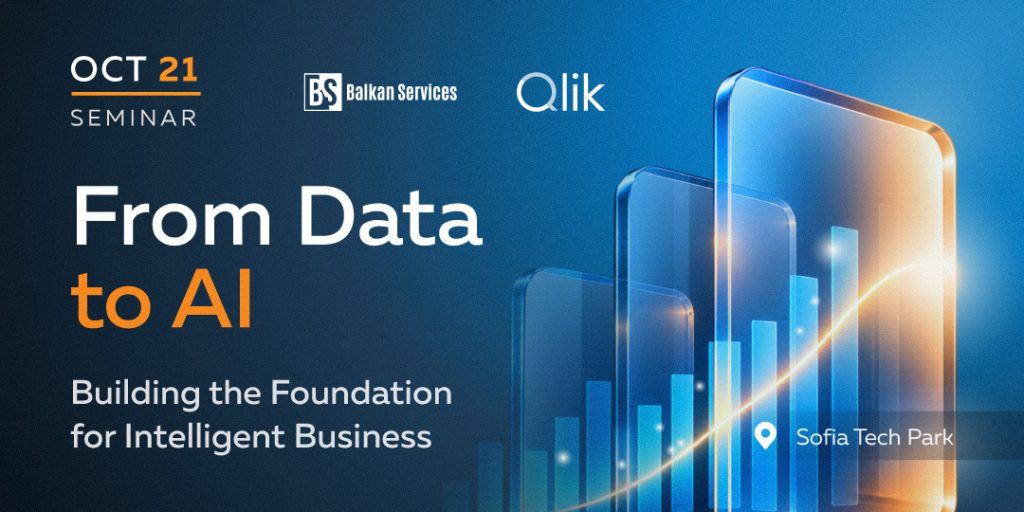
On October 21, Balkan Services and Qlik brought together business and technology professionals at The Venue, Sofia Tech Park, for From Data to AI: Building the Foundation for Intelligent Business.
As organizations look to integrate AI into their operations, they often start by choosing the technology. However, its ability to deliver reliable and meaningful results depends on something much more fundamental: data quality, the processes used to manage it, and the ability to turn information into actionable insights.
So the central question of the half-day seminar was: Is business data ready to support smarter decision-making and the effective use of artificial intelligence?
The topic sparked interesting discussions among participants, drawing attention to the real-world challenges of working with data across different systems, teams and business functions.
One of the first key topics of the day was explored in a joint presentation by Boyana Likomanova-Dimova, Partner and Head of Business Solutions & Consulting at Balkan Services, and Dimitar Prodanov, Partner and BI Solution Architect at the company.
They examined the gap between organizations’ ambitions to use AI and their readiness to support it with reliable data. Research figures cited from Cloudera illustrated the scale of the challenge.
According to the research presented, only 7% of respondents considered their data completely ready for AI. Data silos and integration challenges were the most frequently cited barriers, reported by 56% of respondents. Other challenges included the lack of a clear strategy, reported by 44%, and data quality issues or bias, reported by 41%.
These findings demonstrate that implementing an AI solution does not automatically mean an organization is ready to use it effectively. When data is fragmented, inconsistent or difficult to access, even the most advanced technologies can struggle to produce reliable results.
Preparing for AI therefore starts with an honest assessment of the current state of an organization’s data, identifying gaps and establishing the processes and responsibilities needed to address them.
During the event, the Balkan Services and Qlik teams also explored practical steps organizations can take to make their data more reliable and useful for decision-making.
One of the key examples illustrated how the same business term can have different meanings across departments.
For example, “Sales” may refer to closed orders for the Commercial team, delivered goods for Logistics, or invoiced revenue and related accounting documents for Accounting. Although everyone uses the same term, the underlying metrics represent different business events.
Without a shared definition, comparisons between departments can be misleading. Reports may appear contradictory even when each system is accurately recording the activities it was designed to track.
To avoid this, organizations need to establish what each metric means, which information source should be used, which business event and date are relevant, and who is responsible for validating the results.
Another important takeaway from the day was that data extraction and transformation can be completed without technical errors while still producing inaccurate or misleading information. In other words, a process can run successfully from a technical perspective without delivering the correct business result.
That is why data validation should go beyond checking whether a process has executed successfully. It should follow five key steps:
The same principle applies to reporting. A dashboard may contain every available metric, but that does not necessarily mean it supports better decisions. Effective data visualization should highlight the most important indicators, make performance changes visible and show where further analysis or action is needed.
One example demonstrated how an overall increase in gross profit can conceal declining performance in individual product groups. By making these differences visible, decision-makers can look beyond headline figures and identify where the business is performing well and where it is losing value.
The goal is not simply to have more data, but to make information easier to understand, trust and use in practice.
The Qlik team gave participants a live demonstration of how the principles behind reliable analytics are equally important for successful AI adoption.
In a joint presentation, Yoana Teodora Halip, Kristina Vityuk and Slawomir Baranowski explored how AI capabilities, particularly through the Qlik platform, can evolve from helping users create content, explain information and explore data to working with approved business data and context, and eventually executing permitted actions under appropriate oversight.
Each stage requires careful consideration of data access, responsibilities, governance and control. AI systems need access to relevant information, but that access must be governed by clear rules. Their outputs and actions must also be evaluated in the context of the business processes they support.
As organizations move toward more advanced AI applications, data quality, transparency and clearly defined responsibilities become even more important.
The central message was clear: AI should extend human capabilities, not replace human judgment.
The discussions throughout From Data to AI highlighted the importance of treating data, analytics and artificial intelligence as interconnected parts of a broader business strategy.
For organizations, the journey starts with understanding which decisions need to improve and what information is required to support them. The next steps include establishing consistent metrics, reliable reporting, stronger data governance and a structured approach to AI adoption.
The conversations among participants demonstrated how relevant these questions are for companies undergoing digital transformation. Moving from experimentation to tangible results requires more than technological capabilities. It also calls for collaboration between business and IT teams, clearly defined processes and confidence in the information used to make decisions.
The customer story of ORNO, a major distributor and a client of both Balkan Services and Qlik, brought this message to life, highlighting the importance of choosing the right partner for digital transformation. Through their partnership, Balkan Services and Qlik helped the client connect business needs with data analytics capabilities, illustrating how a well-grounded approach to data can support more informed decision-making and create opportunities for greater business value along with a solid foundation for future AI adoption.
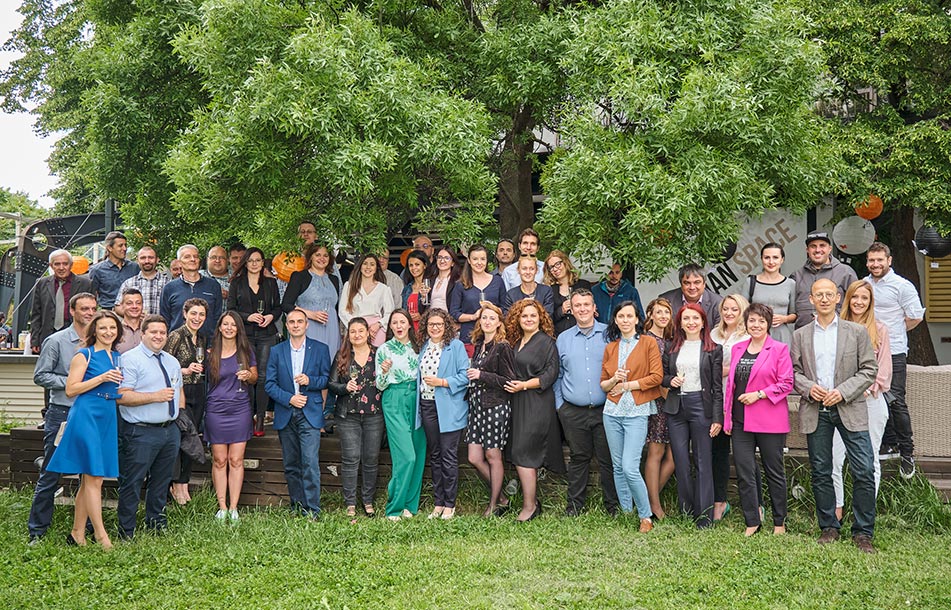
Balkan Services and Qlik would like to thank everyone who joined the event and contributed to the discussions.